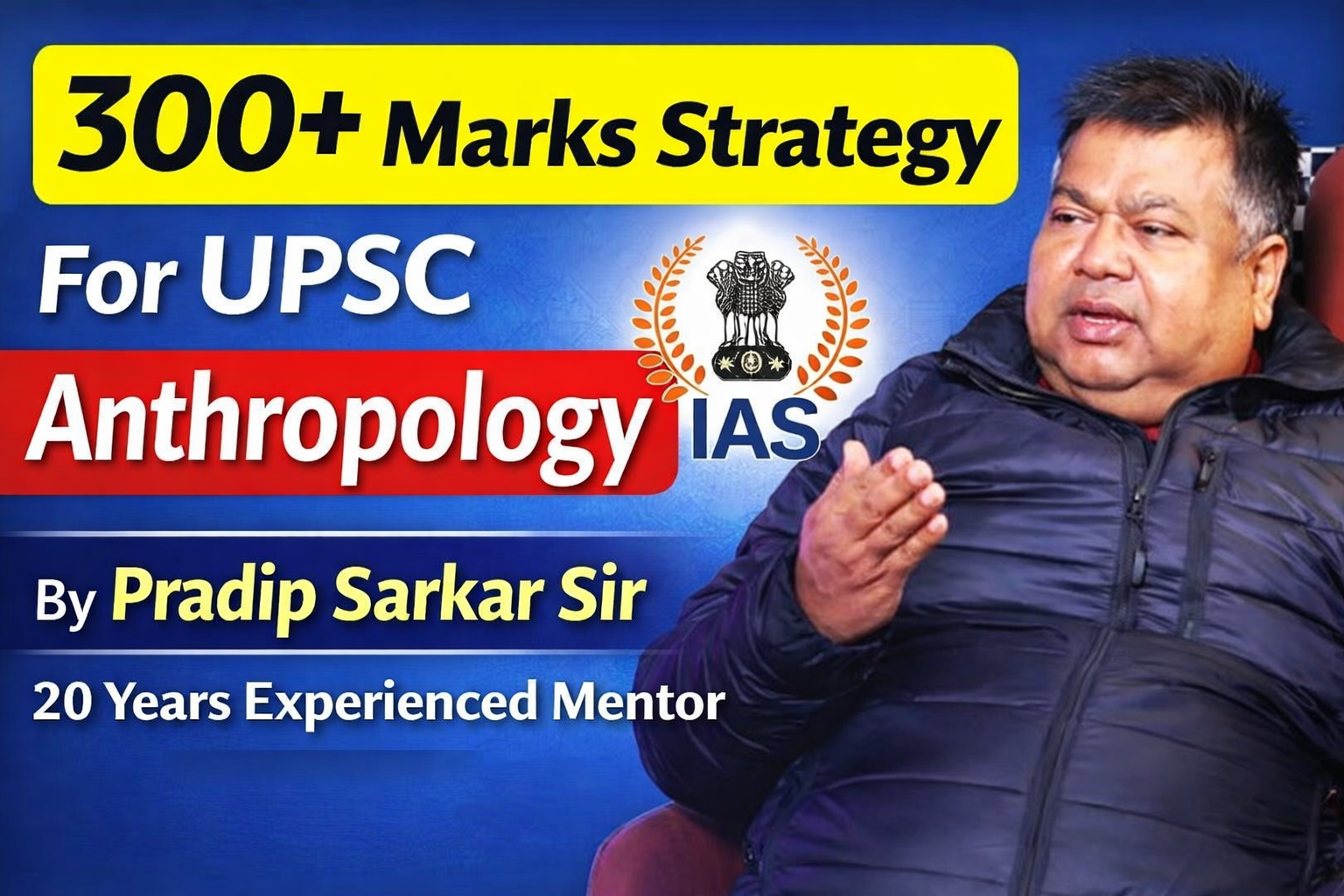
UPSC Mains Anthropology Optional Preparation Strategy
Anthropology is one of the most popular and scoring optionals in UPSC CSE Mains. It has a concise, logical syllabus that overlaps with GS Paper 1 (Society), Essay, and even Ethics. Toppers consistently score 300+ marks. With disciplined preparation, diagrams, scholar references, and examples, 340–360+ is achievable. It suits science, engineering, or medical graduates but is accessible to all with conceptual clarity.
1. Understand the Syllabus Thoroughly (First 3–5 Days)
Download the official syllabus and map it with previous year questions (PYQs). Focus on high-weightage areas.
Paper 1 (Fundamentals of Anthropology – 250 marks)
- Meaning, scope, branches, relationship with other disciplines.
- Human evolution, primates, fossils.
- Biological basis of life, genetics, race.
- Socio-cultural aspects: culture, society, marriage, family, kinship, economic/political organization, religion.
- Anthropological theories.
- Research methods, language, applications (forensic, nutritional, etc.).
Paper 2 (Indian Anthropology – 250 marks)
- Evolution of Indian culture, ethnic groups.
- Caste, tribe, village studies.
- Tribal situation in India, problems, policies (Xaxa Report is gold).
- Impact of urbanization, industrialization, globalization on tribes.
- Applied anthropology in India.
Important Tips - : Analyze PYQs topic-wise (last 10 years). Questions are repetitive in themes like theories, genetics, tribal issues.
2. Standard Booklist (Limited & High-Quality Sources Only)
Paper 1
Sapiens IAS Coaching Notes + Importaant Books ( For Book List You Can Call Directly On 9560044902 )
Paper 2
Sapiens IAS Coaching Notes + Importaant Books ( For Book List You Can Call Directly On 9560044902 )
Do NOT read everything cover-to-cover. Use syllabus + PYQs to select topics only.
3 . 4-Month Step-by-Step Preparation Plan
Month 1–2: Foundation & Notes Making
- Read topic-wise (Paper 1 first → easier to build concepts).
- Make concise notes (1–2 pages per topic):
- Definitions with scholars (e.g., Malinowski on Kula Ring, Boas on Historical Particularism).
- Criticisms + balanced conclusion.
- 2–3 global + Indian examples.
- Diagrams/flowcharts (practice daily).
- Use Sapiens IAS Answer Writing Templates For Answer writing practice.
Month 2–3: Paper 2 + Integration
- Focus on Indian tribes, policies, and current issues.
- Maintain a separate notebook for current affairs (The Hindu, EPW, tribal ministry schemes, PVTG issues, genetic research).
- Link Paper 1 theories to Paper 2 examples (e.g., tribe-caste continuum).
Month 3–4: Answer Writing + Revision
- Daily 2–3 answers (start with 10-marker, then 15/20).
- Full mock tests (2 per week).
- Revise notes 4–5 times .
Total Time: 3–4 months of focused study (4–5 hrs/day) is enough if you have GS base. Beginners may need 5–6 months.
4. Paper-Specific Strategy
Paper 1
- Physical Anthropology (evolution, genetics, primates, fossils) : Maximum diagrams + latest updates (epigenetics, DNA profiling). Practice skulls, DNA replication, Hardy-Weinberg law.
- Theories: Short notes on each thinker + work + tribe + criticism.
- Attempt all physical anthro questions – they are static and diagram-heavy.
Paper 2
- Heavy on case studies (Indian tribes + world parallels).
- Memorize Xaxa recommendations + recent schemes (e.g., for PVTGs).
- Always link to constitutional provisions, development issues, and globalization impact.
5. Answer Writing Mastery (The Game-Changer)
- Structure (every 20-marker):
1. Scholarly introduction + definition.
2. Body (explanation + 2–3 examples + diagram).
3. Criticisms/alternatives.
4. Conclusion (balanced + forward-looking).
- Diagrams: 1–2 per answer (neat, labelled). They fetch 30–50 extra marks.
- Scholar references: 2–3 per answer (names + year + key work).
- Examples : World tribes (Ember) + Indian tribes (Nadeem Hasnain).
- Time management: 8–9 mins per 10-marker, 15–18 mins per 20-marker.
- Practice under the guidance of Pradip Sarkar Sir
6. Revision, Tests & Current Affairs
- Revision: 4–5 cycles. Use your own notes + diagrams sheet.
- Mocks: Join a test series of Sapiens IAS Anthropology .
- Current Affairs : Focus on tribal news, genetic breakthroughs, applied anthropology (forensic cases, sports anthropology).
- Solve PYQs religiously – 60–70% questions are from past trends.
7. Common Pitfalls to Avoid
- Overloading with books/coaching material.
- Ignoring diagrams or scholar names.
- Weak answer structure (just theory without examples).
- Neglecting Paper 2 current linkage.
- Poor revision (most fail here).
Final Tip from Pradip Sarkar sir : Treat Anthropology as a “specialist subject” – write like an anthropologist, not a generalist. Consistency + daily diagram practice = 300+ guaranteed.
Start today with syllabus and Notes Of Sapiens IAS With some authentic books, you can easily score among the highest in optional if you follow this blueprint.
Stay consistent. Anthropology rewards clarity and presentation more than rote learning.
Call 9560044902 For Any Discussion